
Biomedical Sciences Datasets
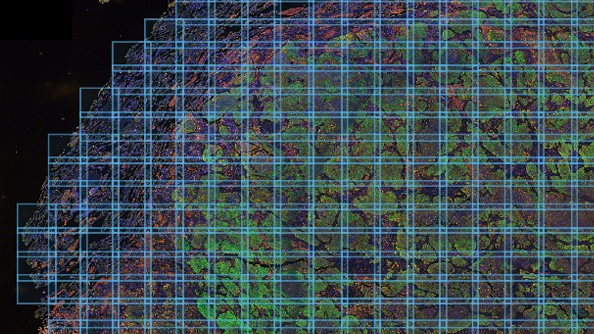
SciServer currently includes datasets from two biomedical research project, both looking at the structure of cancer cells.
Each dataset is listed in an expandable section below. Expand it to learn what each dataset contains and how to access it.
AstroPath
What it is: AstroPath consists of high-fidelity, whole-slide spatial maps of the tumor microenvironment (TME), profiling 100,000–2 million cells per slide to offer an unprecedented single-cell view of tumors. SciServer hosts the public release of the AstroPath datasets. Additional information on AstroPath can be found on our science domain page.
The letters in each AstroPath dataset’s project ID indicate the experimental protocol or platform used (e.g., apmifwsi stands for AstroPath Multiplex Immunoflourescence Whole-Slide Imaging), while the numbers correspond to a specific collection of specimens — typically derived from a single scientific study and processed under consistent experimental conditions. Each dataset is further organized into data release folders (DR##), which contain separate subdirectories for each specimen labeled using AstroID nomenclature.1
Each dataset includes a README.md file detailing the dataset contents and changes between releases. For spatial datasets, a wsi.zarr (multiscale whole-slide image in OME zarr format) and a cells.parquet file (single-cell data in parquet format) can be found within the slide folder for a given patient specimen.
How to access: Join the AstroPath Science Domain from your dashboard’s Science Domains page. Once you are a member, create a SciServer Compute container and mount the data volumes starting with `ap`. For step-by-step guidance, see our Getting Started with AstroPath in SciServer page.
Datasets
> apmifwsi002 +
The dataset is composed of multiplex immunofluorescence imaging of pre-treatment biopsies and on-treatment surgical resections collected from patients with non–small cell lung cancer who received neoadjuvant immunotherapy as a part of a clinical trial [see citations below]
Citations
- Forde PM, Chaft JE, Smith KN, Anagnostou V, Cottrell TR, Hellmann MD, et al. Neoadjuvant PD-1 Blockade in Resectable Lung Cancer. N Engl J Med. 2018 May 24;378(21):1976-1986. doi: 10.1056/NEJMoa1716078. PMID: 29658848. PMCID: PMC6223617.
- Berry S, Giraldo NA, Green BF, Cottrell TR, Stein JE, Engle EL, et al. Analysis of multispectral imaging with the AstroPath platform informs efficacy of PD-1 blockade. Science. 2021 Jun 11;372(6547). doi: 10.1126/science.aba2609. PMID: 34112666. PMCID: PMC8709533.
- Cottrell TR, Roskes JS, Fotheringham M, Cohen E, Zhang B, Engle LL, et al. Novel Predictive Spatial Biomarker in Non-Small Cell Lung Carcinoma: The Diversity of Niches Unlocking Treatment Sensitivity (DONUTS). bioRxiv. 2025 Sep 24. doi: 10.1101/2025.08.13.665980. PMID: 40832222. PMCID: PMC12363902.
> apmifwsi011 +
The dataset is composed of multiplex immunofluorescence imaging of pre-treatment biopsies collected from patients enrolled in the CheckMate 057 clinical trial for advanced, previously treated, non-squamous non–small cell lung cancer [see citations below].
Citations
- Borghaei H, Paz-Ares L, Horn L, Spigel DR, Steins M, Ready NE, et al. Nivolumab versus Docetaxel in Advanced Nonsquamous Non-Small-Cell Lung Cancer. N Engl J Med. 2015 Oct 22;373(17):1627-39. doi: 10.1056/NEJMoa1507643. PMID: 26412456. PMCID: PMC5705936.
- Berry S, Giraldo NA, Green BF, Cottrell TR, Stein JE, Engle EL, et al. Analysis of multispectral imaging with the AstroPath platform informs efficacy of PD-1 blockade. Science. 2021 Jun 11;372(6547). doi: 10.1126/science.aba2609. PMID: 34112666. PMCID: PMC8709533.
- Cottrell TR, Roskes JS, Fotheringham M, Cohen E, Zhang B, Engle LL, et al. Novel Predictive Spatial Biomarker in Non-Small Cell Lung Carcinoma: The Diversity of Niches Unlocking Treatment Sensitivity (DONUTS). bioRxiv. 2025 Sep 24. doi: 10.1101/2025.08.13.665980. PMID: 40832222. PMCID: PMC12363902.
> apmifwsi034 +
The dataset is composed of multiplex immunofluorescence imaging of pre-treatment biopsies collected from patients with advanced non–small cell lung cancer who received anti–PD-1 therapy as standard of care. Slides were stained with a 7-color panel (DAPI, PD-L1, CD8, FoxP3, Cytokeratin, PD-1, CD68), scanned on the Vectra Imaging System (Akoya Biosciences), and processed by the AstroPath pipeline to generate whole-side images and extract cell-by-cell data.
> apscseq002 +
The dataset is composed of single-cell RNA sequencing (scRNA-seq) extracted from on-treatment surgical resections collected from patients with non–small cell lung cancer who received neoadjuvant immunotherapy as a part of a clinical trial.2,4 This sequencing dataset has corresponding multiplex immunofluorescence (mIF) data available in apmifwsi002, which can be linked via their AstroIDs.
> apmifwsi001 +
The dataset is composed of multiplex immunofluorescence imaging of pre-treatment biopsies collected from patients with advanced, unresectable stage 3 or stage 4 melanoma treated with anti-PD-1-based therapy.5 Slides were stained with a 7-color panel (DAPI, PD-L1, CD8, FoxP3, Sox10/S100, PD-1, CD163), scanned on the Vectra Imaging System (Akoya Biosciences), and processed by the AstroPath pipeline to generate whole-side images and extract cell-by-cell data.
> apmifwsi013 +
The dataset is composed of multiplex immunofluorescence imaging of pre-treatment biopsies collected from patients with metastatic melanoma treated with anti-PD-1-based therapy.5 Slides were stained with a 7-color panel (DAPI, PD-L1, CD8, FoxP3, Sox10/S100, PD-1, CD163), scanned on the Vectra Imaging System (Akoya Biosciences), and processed by the AstroPath pipeline to generate whole-side images and extract cell-by-cell data.
References
- Will, E., Green, B., Qadri, A., et al. (2024). 693 AstroID: A novel REDCap-based relational database to house biospecimen data. Journal of Investigative Dermatology 144, S121. doi: 10.1016/j.jid.2024.06.709.
- Forde PM, Chaft JE, Smith KN, et al. Neoadjuvant PD-1 Blockade in Resectable Lung Cancer. N Engl J Med. 2018 May 24;378(21):1976-1986. doi: 10.1056/NEJMoa1716078. Epub 2018 Apr 16. Erratum in: N Engl J Med. 2018 Nov 29;379(22):2185. doi: 10.1056/NEJMx180040. PMID: 29658848; PMCID: PMC6223617.
- Borghaei H, Paz-Ares L, Horn L, et al. Nivolumab versus Docetaxel in Advanced Nonsquamous Non-Small-Cell Lung Cancer. N Engl J Med. 2015 Oct 22;373(17):1627-39. doi: 10.1056/NEJMoa1507643. Epub 2015 Sep 27. PMID: 26412456; PMCID: PMC5705936.
- Caushi JX, Zhang J, Ji Z, et al. Transcriptional programs of neoantigen-specific TIL in anti-PD-1-treated lung cancers. Nature. 2021 Aug;596(7870):126-132. doi: 10.1038/s41586-021-03752-4. Epub 2021 Jul 21. Erratum in: Nature. 2021 Oct;598(7881):E1. doi: 10.1038/s41586-021-03893-6. PMID: 34290408; PMCID: PMC8338555.
- Berry S, Giraldo NA, Green BF, et al. Analysis of multispectral imaging with the AstroPath platform informs efficacy of PD-1 blockade. Science. 2021 Jun 11;372(6547):eaba2609. doi: 10.1126/science.aba2609. PMID: 34112666; PMCID: PMC8709533.
CyTOF Atlas
What it is: The data volume CyTOF_Atlas stores the datasets used for the Pancreatic cancer immunotherapy study, which curates a single cell proteomics atlas of human PBMCs from three combination immunotherapy clinical trials in metastatic PDAC patients to disentangle individual effects of cancer vaccines, GVAX and CRS-207, and immune checkpoint blockade therapies, anti-PD-1, and anti-CTLA-4. The data volume is protein-level annotated from immunotherapy-treated cancer patients and serves the purpose of enabling non-computationally inclined immunologists and cancer biologists to explore the datasets and computational applications.
How to access: Join the Genomics Science Domain from your dashboard’s Science Domains page. Once you are a member, create a SciServer Compute container and mount the CyTOF Atlas Data Volume.
See the CyTOF Atlas dataset page for more information.